
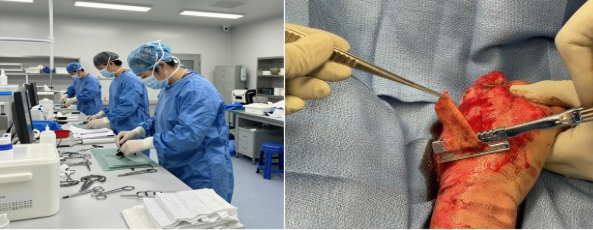
When a burn patient needs immediate debridement at 2 AM, your team shouldn't be hunting for sterile prep blades or waiting on SPD to rush-process instruments. Yet this scenario plays out daily in burn units that still rely on reusable blades that must be sterilized, tracked, and used within strict 48-hour windows.
Burn care doesn't follow a predictable schedule. Daily debridement, frequent bedside procedures, and urgent interventions demand tools that are always ready. Here's why the reprocessing model fails to burn care—and how single-use sterile blades solve it.
The Reprocessing Problem
The 48-Hour Sterilization Trap
Reusable prep blades create a continuous cycle:
Decontamination → Inspection → Sterilization → 48-hour use window → Expiration and re-sterilization.
This works for scheduled surgeries, but becomes a barrier when burn patients need immediate care.
The SPD Burden
For Sterile Processing departments, reusable blades create a significant hidden workload. SPD staff must continuously track blades through decontamination cycles while monitoring 48-hour expiration windows. When clinical demand spikes, they rush-process instruments to meet urgent needs. Blades that weren't used within their window must be re-sterilized, adding to the sterilizer load and requiring additional biological indicator testing. The irony? Much of this labor produces instruments that expire unused, creating waste without improving patient care.
Infection Risk in Vulnerable Patients
Burn patients are among the most infection-vulnerable populations in healthcare. Every reprocessing cycle introduces contamination touchpoints:
Traditional reusable path: Patient use → Decontamination (handled) → Assembly (handled) → Sterilization → Storage (handled) → Transport (handled) → Patient use
Clinical Consequences
When blades aren't available, the clinical consequences multiply quickly. Delayed debridement increases the risk of infection in already vulnerable burn patients, while delayed grafting can affect healing outcomes. OR schedules cascade into delays that impact multiple cases, and staff may be forced to improvise with suboptimal alternatives that put patients at unnecessary risk.
Performance Degradation
Repeated sterilization gradually dulls blades, creating inconsistent prep quality and unpredictable tool performance. There's no way to assess sharpness before use—the degradation is invisible until it affects clinical results.
The Single-Use Solution
-
Always Procedure-Ready
Single-use sterile blades arrive pre-sterilized with 3-5 year shelf life. When your team needs debridement—day or night—they open a package and begin. No SPD calls, no sterilizer waits, no expiration tracking.
-
Guaranteed Sterility
Single-use path: Manufacturer sterilization → Sealed barrier → Storage → Patient use
Minimal touchpoints mean reduced HAI risk pathways. Sterility assurance comes from controlled manufacturing, not hoping every reprocessing step was executed perfectly.
-
Consistent Performance Every Time
Every blade delivers optimal sharpness with no loss of sharpness from repeated sterilization cycles. This ensures predictable cutting performance across all procedures while reducing technique variation between clinicians. The result is improved prep consistency across all shifts, giving your team reliable tools regardless of when or who performs the procedure.
-
True Cost Efficiency
Single-use blades eliminate hidden reprocessing costs that are often overlooked in traditional cost comparisons. Reusable blades carry significant hidden expenses, including SPD labor for cleaning, sterilizing, tracking, and documenting each cycle. Add sterilizer operation and maintenance costs, biological indicator testing requirements, and storage and inventory management overhead. Factor in instruments that must be discarded due to expiration and the ongoing replacement costs for damaged or lost blades. When you calculate the complete cost of ownership, single-use options often prove cost-neutral or even cost-saving.
Download our Value Analysis Worksheet Here
Product Specifications Sales Sheet - Click to Download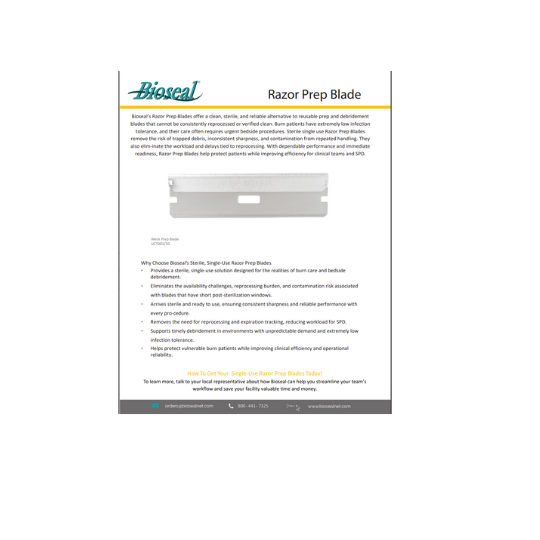
Bioseal Weck Prep Blade Specs
|
Specification |
Details |
|
SKU |
KI203/50 |
|
Packaging |
3 blades/pack, 50 packs/case |
|
Type |
Single-edge surgical prep blade |
|
Sterility |
Pre-sterilized, individually sealed |
|
Shelf Life |
3 years |
Ideal for: Burn debridement, pre-surgical prep, bedside procedures, emergency wound care
What This Means for Your Team
For SPD Managers
Single-use blades eliminate blade tracking and 48-hour expiration monitoring entirely. Your department reduces sterilizer load and maintenance requirements while freeing staff time to focus on complex instruments that truly require reprocessing expertise. Regulatory compliance becomes simpler with fewer documentation requirements and clearer quality assurance tracking.
For OR Managers
Single-use blades provide predictable supply availability that improves on-time starts and room turnover rates. Case delays due to instrument unavailability are reduced or eliminated, and you can convert fixed labor costs associated with reprocessing into variable utilization costs that scale with actual patient volume.
For Infection Preventionists
Single-use blades create fewer contamination pathways by eliminating multiple handling touchpoints. Outbreak investigations are simplified with clearer traceability, and the approach supports HAC Reduction Program goals while providing clear, compelling data for value analysis committee presentations.
Ready to Make the Switch?
Request Your Sample Kit or Contact Sales Here
Get complimentary samples, including:
- Weck Prep Blade clinical samples
- Product specifications
- Value analysis worksheet
- Implementation guide
Request a Free Sample Here
Or Scan this QR CODE

Calculate Your Savings
Use our Value Analysis Worksheet to compare your reprocessing costs against single-use alternatives.
Download Cost Calculator Here