
In high-acuity environments like the Operating Room (OR) and Extracorporeal Membrane Oxygenation (ECMO) units, patient advocacy means controlling every possible variable. While clinical attention is naturally focused on cannulation technique and hemodynamic parameters, the mechanical securement of the circuit itself is a critical safety interface.
For years, securing life-sustaining lines has relied on manual workarounds: hand-pulled ties, medical tape, or non-sterile industrial tools passed into the sterile field.
For years, securing life-sustaining lines has relied on manual workarounds: hand-pulled ties, medical tape, or non-sterile industrial tools passed into the sterile field.
For Sterile Processing Department (SPD) and Operating Room managers, these workarounds present significant clinical, operational, and regulatory challenges. Today, patient advocates in leadership are standardizing care by transitioning to Bioseal’s sterile, single-use cable tie guns.
Resolving the SPD Reprocessing and Compliance Headache
A major operational vulnerability involves the tools used to tighten and cut cable ties. When units utilize reusable or industrial-grade cable tie tensioners, they face serious compliance hurdles:
- The IFU Gap: The Joint Commission and other regulatory bodies require a validated Instruction for Use (IFU) for every tool processed by SPD. Industrial or hardware-store tie guns lack medical IFUs, making them impossible to process compliantly and creating immediate red flags during audits.
- Reprocessing Overhead: Attempting to clean, sterilize, and track reusable tensioning tools drains valuable SPD time and resources.
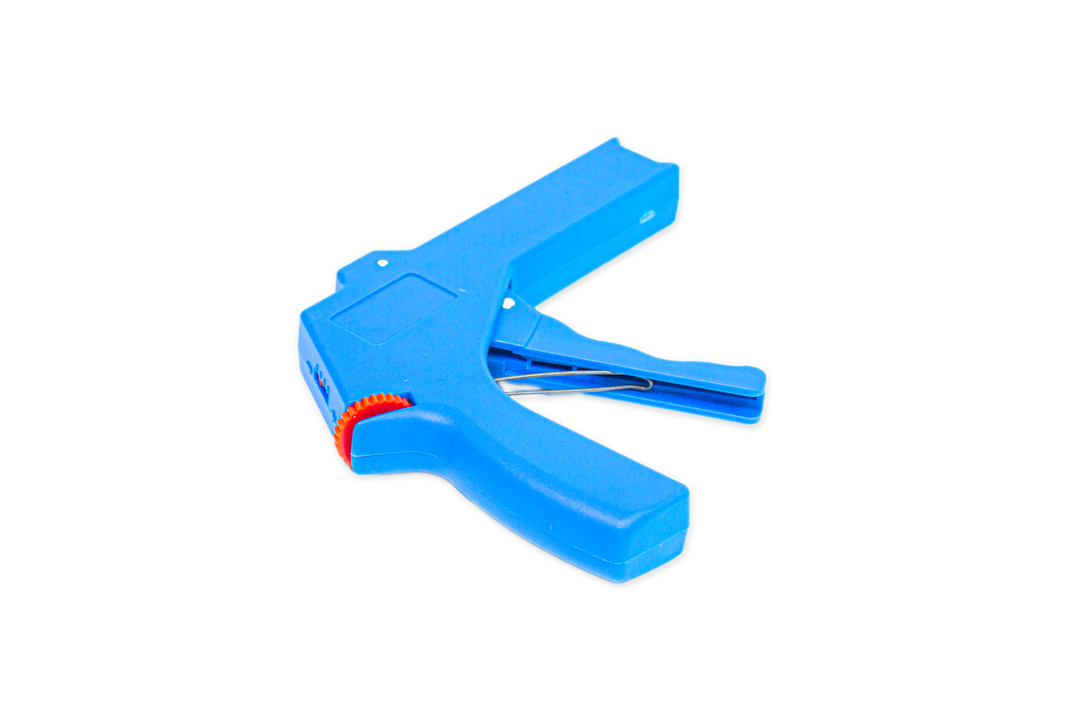
- The Single-Use Solution: Bioseal’s disposable cable tie guns (available as SKU 17170/10 in Blue and 17172/10 in Red) arrive pre-packaged and sterile. Because they are designed for single use, they bypass the SPD reprocessing loop, guaranteeing sterility for every procedure and ensuring compliance with infection control standards.
Protecting Sterile Field Integrity in the OR
Maintaining a strict sterile boundary is a fundamental mandate for OR managers. When standard non-sterile tools are introduced into the sterile field to secure ECMO cannulas or circuit tubing, the risk of compromising sterility increases dramatically. Because ECMO cannulas penetrate the skin and remain in place for days or weeks, they provide a direct pathway for pathogens, increasing the risk of catheter-associated bloodstream infections (CLABSIs).
Utilizing a single-use, sterile-packaged tool allows clinicians to secure tubing directly within the sterile field. This simple change eliminates the risk of cross-contamination from unvalidated bedside tools, directly supporting infection prevention initiatives.
Achieving Controlled, Repeatable Tensioning
Manual securement methods—such as pulling ties by hand or using sutures alone—suffer from extreme user variability. Tightness is entirely dependent on individual hand strength. This introduces two serious clinical risks:
- Under-tightening: Insufficient tension allows the cannula or tubing to slip, increasing the risk of cannula migration, site bleeding, or catastrophic accidental decannulation during patient transport or proning.
- Over-tightening: Excess force can deform cannula hubs or compress delicate ECMO tubing, restricting flow and leading to delayed circuit failure.
Bioseal’s cable tie gun features an integrated tension indicator and adjustment dial. This allows clinical teams to establish and replicate the exact required tension every time, securing the lines firmly without compressing the tubing or restricting critical circuit flow.
Bedside Safety and Staff Protection
OR and SPD managers are equally responsible for protecting their staff. Standard manual cutting methods frequently leave sharp, jagged plastic "barbs" on trimmed ties. These edges easily tear sterile gloves, expose clinicians to bloodborne pathogens, and snag on linens, gowns, or dressings.
Bioseal's tool features an automatic cutoff blade that flush-cuts the excess tie material, leaving a perfectly smooth surface. This eliminates the risk of staff injury and secondary contamination. Furthermore, for departments focused on maximum field cleanliness, the 17180/10 model features integrated foam designed to safely capture excess cut tie material during use.
The Advocate's Path to Standardization
Standardizing sterile, single-use securement tools simplifies specialist training, ensures clinical reproducibility during high-stress emergency interventions, and aligns with ECMO program accreditation and quality assurance standards.
By replacing unvalidated, manual securement workarounds with a dedicated clinical tool, SPD and OR managers can simultaneously improve regulatory compliance, protect bedside staff, and deliver a safer, more standardized level of care to their most vulnerable patients.
In summary, Bioseal’s sterile, single-use cable tie guns provide a streamlined, compliant, and patient-centered solution. They eliminate reprocessing burdens, maintain sterile field integrity, ensure consistent securement, and protect both patients and staff. By adopting this approach, organizations can confidently meet regulatory demands and elevate their standard of care.